What makes a Kerala pickle different
June 20265 min read
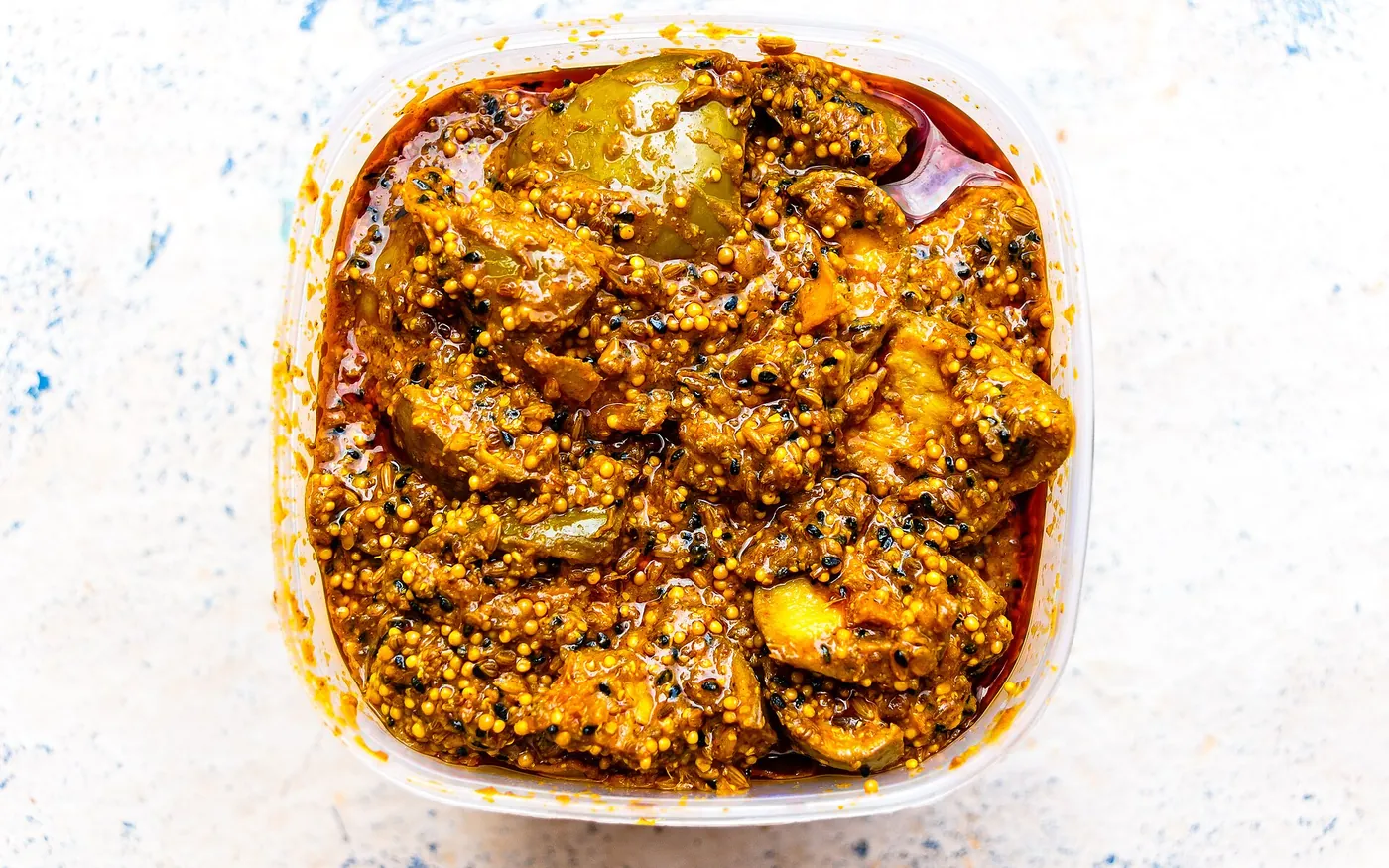
Gingelly oil, raw mango and patience. A look at why South Indian achaar tastes the way it does, and why it keeps without preservatives.
Ask anyone who grew up in Kerala and they will tell you: the pickle jar on the table is not a condiment, it is a memory. A good achaar can carry a plate of plain rice on its own. But what actually sets a Kerala pickle apart from the others you find on a shelf?
It starts with gingelly oil
Most South Indian pickles are cured in gingelly (sesame) oil, not the mustard oil of the north or the sunflower oil of convenience. Gingelly oil has a nutty depth and, crucially, it preserves. The oil seals the cut fruit from air, which is why a properly made pickle keeps for months without a lab full of additives.
Raw fruit, picked in season
A cut-mango pickle is only as good as the mango. We use raw, firm, sour mangoes at the peak of their short season, cut them by hand, and salt them straight away. Salt draws out water, concentrates flavour, and starts the slow cure that gives the pieces their glossy, deep colour.
Time does the work
The single biggest difference is patience. A rushed pickle tastes raw and sharp. We rest ours for days, sometimes weeks, letting salt, chilli and oil settle into the fruit. There is no shortcut for this, and it is the step most mass-market pickles skip.
How to keep yours well
Always use a dry spoon, keep the oil covering the pickle, and store it somewhere cool and dark. Treated right, a jar only gets better with a few weeks behind it.
Taste what we wrote about
Browse the range